

I don’t remember how old I was when my parents first showed me and my brother The Mummy (1999), but it remains a perennial favorite of mine. There are lots of great moments and bits and bobs (the “I am a librarian!” scene for starters), but the flesh-eating scarabs are particularly memorable for their nightmare fuel potential. It’s one of those things that you automatically assume Hollywood must have made up because surely there’s no way those are actually real, right? RIGHT?!
…Right! Well, sort of. Mostly. If I had to stick a number on it, I would say that the flesh-eating scarab is a solid 50% fictional. Keep reading for the details…
WARNING: bug pictures
The Real Scarabs
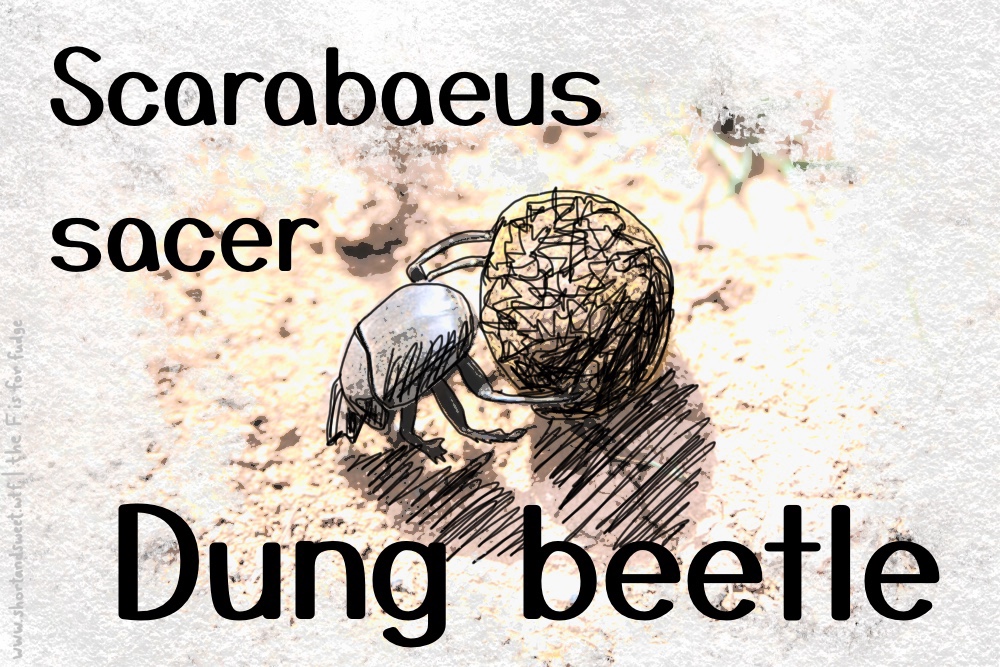
The beetle most famously known as a scarab in the context of ancient Egypt is the sacred scarab, scientific name Scarabaeus sacer. It belongs to the sub-family Scarabaeinae of family Scarabaeidae, which you are probably more likely to recognize by the common name, dung beetle. Most of the scarabs in this sub-family eat dung exclusively, although some will feed on decomposing matter such as carrion. However, they will not be eating anyone alive.
In other words: sorry! Your flesh-eating beetles are in a different castle…er, crypt.
The Real Flesh-Eating Beetles
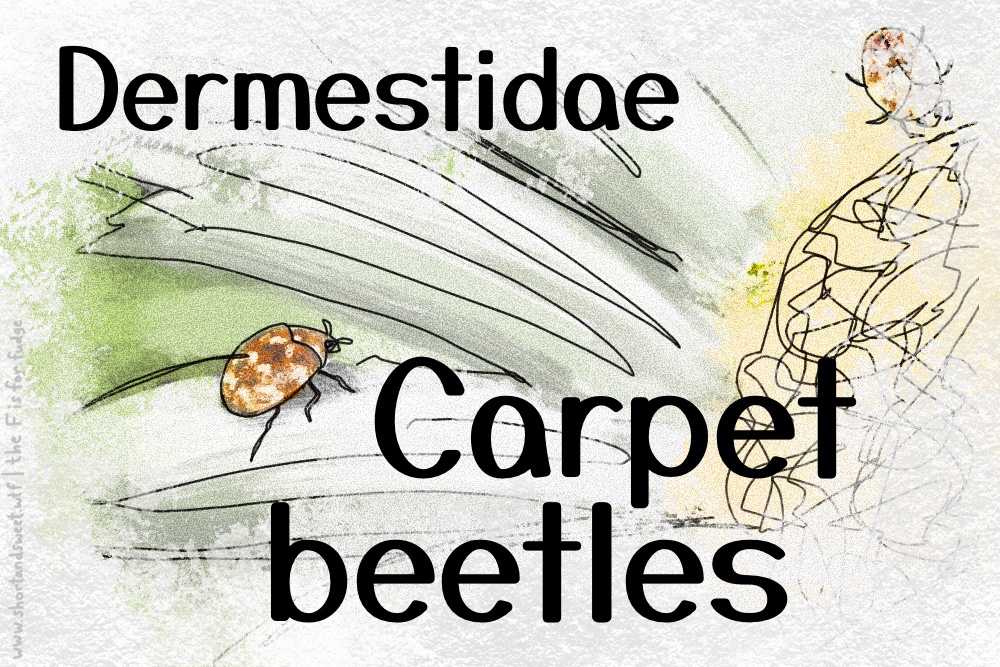
The real flesh-eating beetles are not scarabs and belong to the family Dermestidae. In appearance, they do not particularly resemble the scarabs of Hollywood fame: dermestids are generally small, with the adults ranging from 1-12mm in length. Unlike most real-world scarabs, some dermestids do feed on the flesh of corpses; however, they only feed on corpses in the dry and skeletal phases of decomposition—once again, no eating people alive.
If you locked a bunch of them in a coffin with a living person, they could feasibly feast upon said person…but only if they had enough sustenance to last until the person died and reached the necessary stage of decomposition. Furthermore, this only holds for some species of dermestids—most of them are scavengers that feed on things like dead skin, animal hair, and natural fibers. You’re more likely to find them hanging out behind your couch than in coffins and crypts—commonly known as carpet beetles, they can be quite the household pest (I speak from experience).
The Real “Flesh-Eating Scarabs”
So far I have been focusing on the flesh-eating characteristic of The Mummy’s flesh-eating scarabs, but in the movie, they have another horrifying quality: namely, how they burrow into their victim’s brain. Now, surely an insect that can both devour its victims alive and burrow into their brains is too over the top to exist in real life, right? RIGHT?!
As long as we’re restricting ourselves to the beetle families, that’s absolutely correct!
However, if we look elsewhere, there is in fact an insect whose behavior matches that of the flesh-eating scarab. Good news, though: it only targets Periplaneta americana and other large cockroach species, so you and I are completely safe—but if you’re an American Cockroach, you better be on the lookout.
Introducing the Jewel Wasp
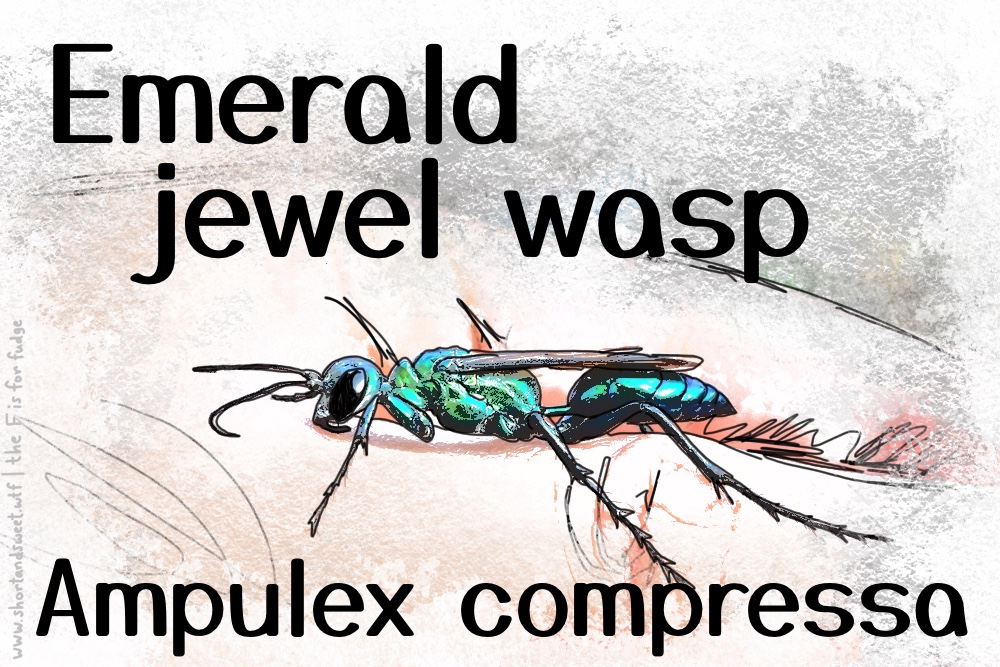
Ampulex compressa, commonly known as the Emerald Jewel Wasp, is a parasitic wasp that treats its cockroach host quite similarly to how the flesh-eating scarabs of The Mummy do their human hosts. While the process is not quite as dramatic as depicted by Hollywood, all of the key elements are present.
How It Works
First, the wasp stings the cockroach in its back, paralyzing it temporarily. The temporary paralysis allows the wasp to sting the cockroach’s head more precisely, using sensory input from its stinger to target a specific location in the brain (the cephalic ganglia). The venom delivered via the second sting essentially lobotomizes the cockroach, which loses its ability to move on its own volition.
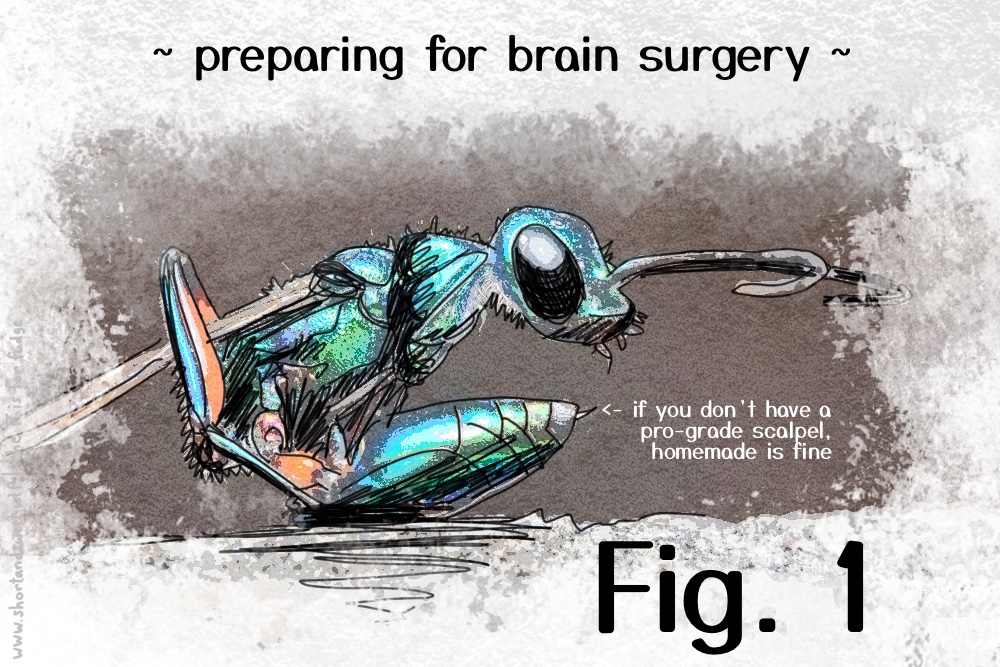
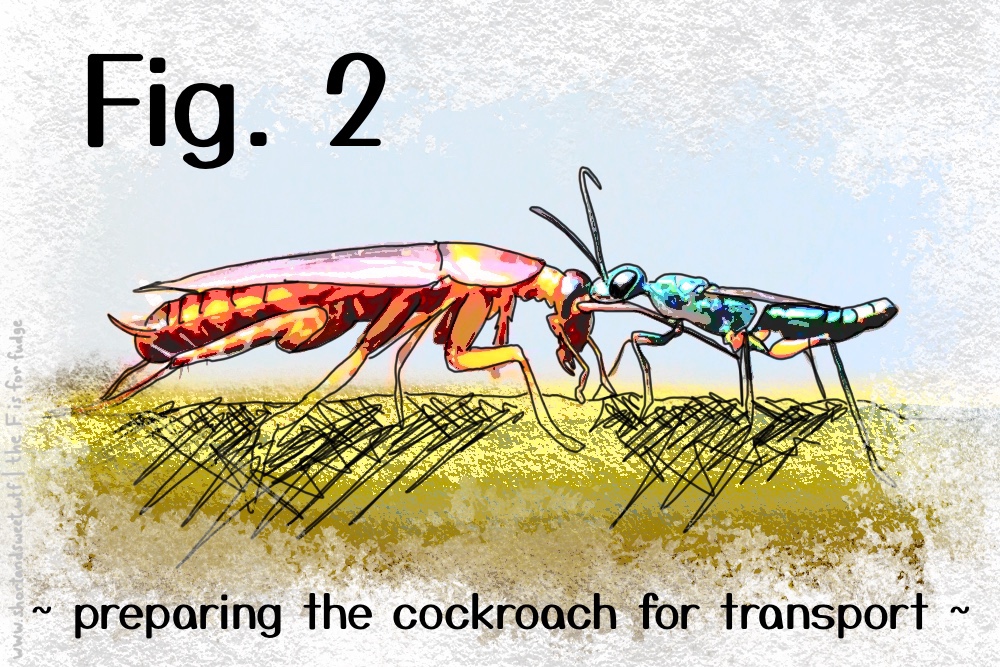
Next, the wasp chews off the cockroach’s antenna and has a snack on its hemolymph (the equivalent of blood in arthropods). Once snack time is over, the wasp then grasps one of the antenna stubs and leads the cockroach to a nearby burrow in a manner often described as “like walking a dog on a leash.”
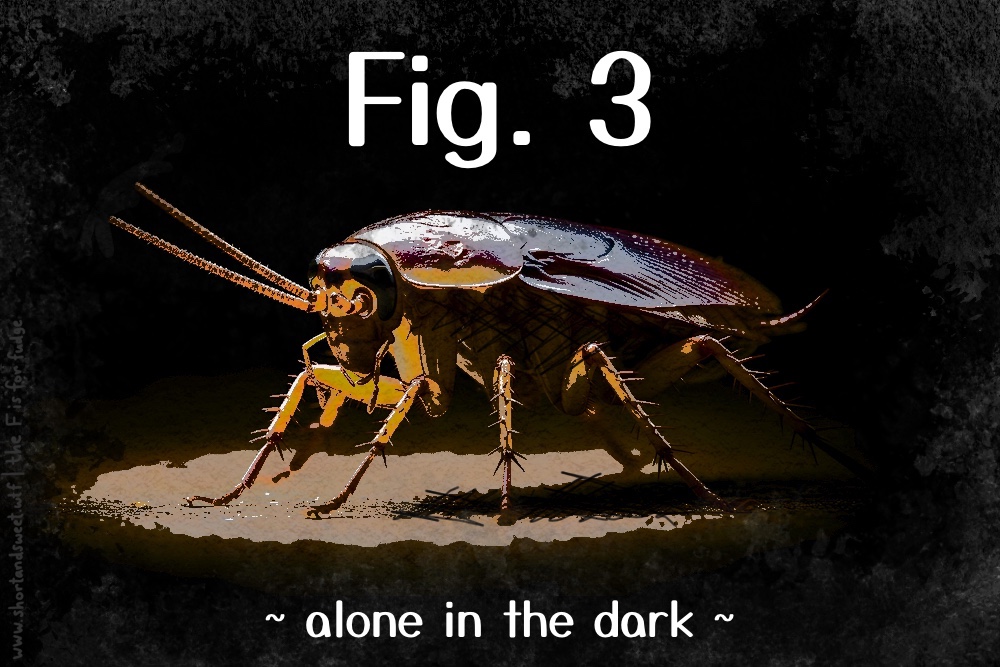
Once the wasp has positioned the cockroach in the burrow, it lays a single egg on one of the cockroach’s legs. The wasp then leaves and covers up the entrance to the burrow, leaving the egg with the zombified cockroach, which, being unable to move, just stands there. Alone. In the dark.
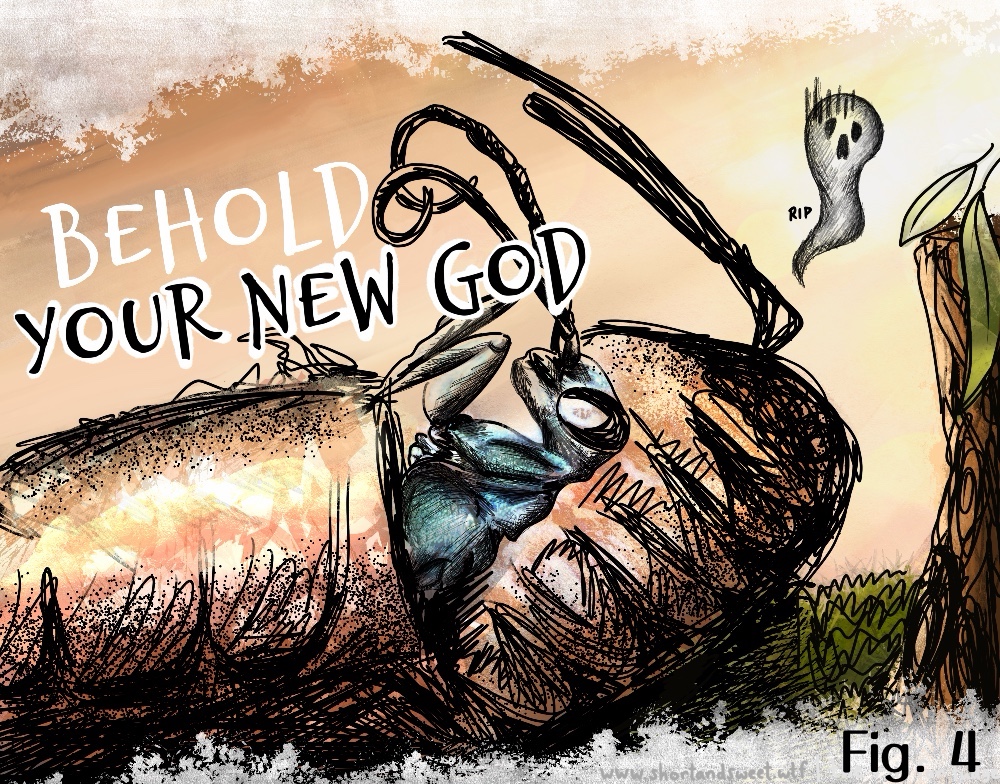
Roughly three days later, the egg hatches and the wasp larva latches onto the cockroach’s leg, using it as a straw to feed on its hemolymph for the wasp’s first two developmental stages (called instars). At the end of the second instar, it relocates into the body of the (still living!) cockroach, where it carefully consumes the internal organs in an order that preserves the life of the cockroach for as long as possible.
Finally, when the wasp larva is fully fed and ready to pupate, it builds a cocoon where it spends the next three weeks. It then emerges in its final form as an adult emerald jewel wasp, leaving behind the desiccated husk of the cockroach. RIP.
Conclusion
People often say that the truth is stranger than fiction, but in this case, I think it’s fair to say that they are on about equal terms. Let’s just hope that the jewel wasps won’t have any need to upgrade to human hosts.


Leave a Reply